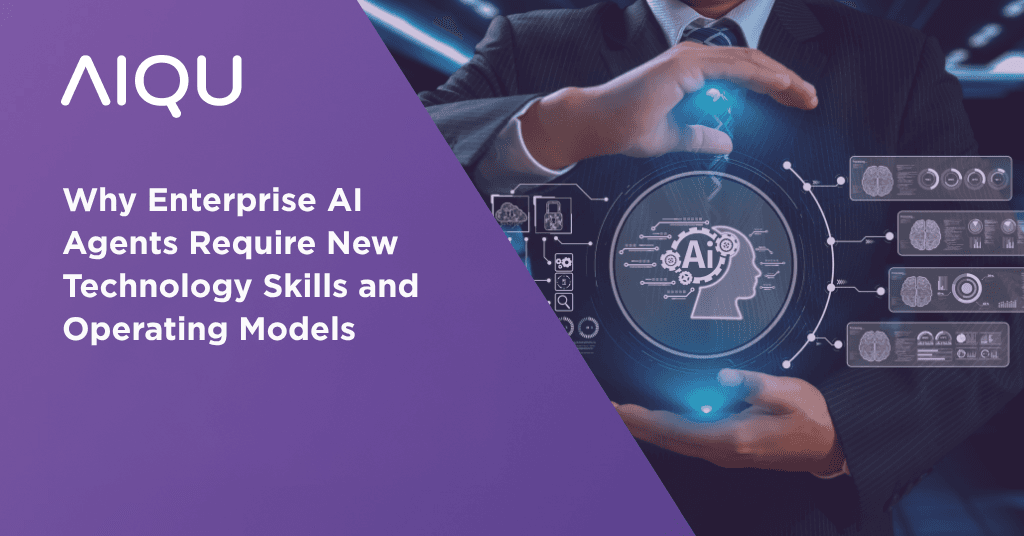
Why Enterprise AI Agents Require New Technology Skills and Operating Models
In a bid to catch up with the trend in digital transformation, AI technology cannot be restricted to mere chatbot or experimental use only. Businesses across Dubai, Riyadh and other parts of the UAE have already started putting autonomous AI systems into everyday operations that can perform tasks with minimal human intervention. However, the incorporation of such technology requires a complete turnaround in the way processes inside an organisation function, how teams collaborate, and the kind of skills employees need to work alongside intelligent systems. It also requires a clear strategy for long-term adoption and continuous improvement.
The integration of autonomous technology is not just about the licensing of software tools. Complete turnaround of business processes, data readiness, governance, and competency of the workforce is absolutely required. Else, a state-of-the-art tool would be put to old-fashioned use, thereby undermining its business value and efficiency.
The Shift from Traditional Software to Autonomous Systems
The classical enterprise software works in accordance with clear instructions and workflow descriptions. IT experts develop the applications on the basis of strict user inputs, which means that their participation is necessary at virtually all stages of the business process. Intelligent platforms, on the other hand, operate in accordance with dynamic rules. They process unstructured data, make decisions in accordance with the analysis and implement multistage workflow with minimal human interaction.
This means that the description of the duties of the internal staff changes as well. The management of software is no longer reduced to mere databases and servers maintenance but involves control of autonomous workflows, the correctness of decisions made, and whether the results of automation comply with the corporate governance rules. Organizations have to realize that intelligent systems behave similar to digital employees rather than programs.
Essential Technology Skills for the Modern Workforce
The process of working with such digital systems requires various sets of skills, both technical and analytical skills, which are not available within the companies teams at the moment. Therefore, it would be appropriate for company representatives to assess their employee’s skill gaps and organize relevant training sessions. Regular learning programmes and practical workshops can help employees understand new technologies and apply them effectively in day to day business operations, improving collaboration between technical, and non technical teams.
- Data Engineering and Data Quality: The team should know how to manage enterprise data correctly in order to ensure that the autonomous system operates in a way that does not involve data distortion or delays. Clean, accurate, and well-managed data improves the quality of autonomous decisions.
- Prompt Engineering and System Tuning: For engineers, it is essential to be able to adjust instructions in order to receive relevant output from the model.
- Model Monitoring and Model Governance: Experts in Information Technologies should know how to use software to track model’s performance and identify potential anomalies.
- Process Mapping: Business Analysts should know how to map business processes in order to integrate autonomous system in human-driven departments.
Redesigning Operating Models for Scalable Integration
Technology upgrading approaches cannot produce any positive effect if applied within the context of an outdated organizational structure. In order to utilize the full potential of intelligent automation, it is important for regional companies to revise their business models making them more flexible, collaborative, and aligned with the principles of data governance.
First of all, IT silos need to be broken down. The technical staff and commercial experts have to cooperate right from the beginning of the project development in order to make sure that the issue is solved. In addition to that, the company needs to set up the data privacy and security framework.
Overcoming Common Implementation Challenges
The deployment of such autonomous systems in complex corporate structures often reveals a number of problems within the business processes. Firstly, there is a resistance to changes coming from the staff caused by fear of losing their jobs and lack of understanding of how intelligent technologies work.
The fragmentation of data is one more issue that many companies have. They store critical information in various databases, cloud servers, and even regional networks. It is necessary for the company to combine all of these sources of information prior to the implementation of intelligent automation.
Partner with AIQU Search for Your Digital Transformation
It is always wise to join hands with another person in handling enterprise technology that is highly complicated. At AIQUSearch, our team works with various companies in the GCC region to help solve the problem that exists between digital objectives and the present state of affairs in the company. Our team offers the required services that can help realize the growth of businesses by using scalable, modern or automated systems. Contact us to ensure that the future of your enterprise operations is safe.
Frequently Asked Questions
1. What is the difference between autonomous systems and the regular enterprise software?
In contrast to regular software running pre-defined rules by users’ requests, autonomous systems use ML and NLP technologies to perform analysis, decision-making and dynamic workflows on their own.
2. How can GCC companies guarantee that their employees are able to work with such innovations?
Companies should conduct skill audits inside the company, provide adequate training regarding data management and system control as well as create the learning environment for the employees.
3. What are the most common risks for security related to autonomous solutions?
Data leakage, model drift and vulnerability risks due to integration of smart systems with the current databases are considered the biggest ones, and proper governance will solve them.
4. Does it mean that GCC companies have to reconstruct their IT department entirely?
Even though there is no need for the complete reconstruction, they still have to create new roles such as model management, data governance and integrated workflow.
5. What Role Does Data Architecture Have In Successful Deployment?
Automatic models require well-structured and clean data to give accurate predictions. A proper data architecture ensures that the automatic models receive the right data to ensure errors are minimal, resulting in better business performance.