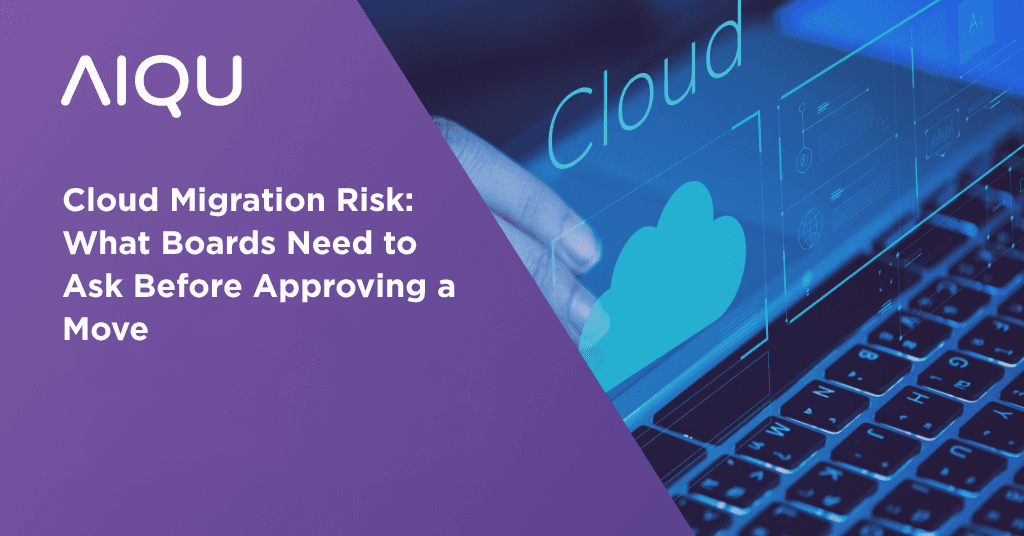
Cloud Migration Risk: What Boards Need to Ask Before Approving a Move
In today’s scenario, decision-making for cloud implementation is not just about technology but also a strategic business operation that affects all aspects from operational aspects to company security.
Though cloud adoption brings along the advantages like speed, scalability, and ease of management, blindly adopting it without proper supervision creates serious security and business-related risks.
Board members are not expected to understand technical details such as code. But they must strategically pose the questions so they understand the overall picture and implications of the project before approving a large budget for cloud-related activities. The following are some of the main questions a board has to consider before going into the cloud through a migration.
1. What Will Be Our Cloud Migration Plan In The Long Run?
Often the problem of companies is adopting cloud computing only because others have done it. Lack of planning when migrating systems generally results in money waste and inefficient working methods.
To begin with, board members should understand:
- What is the reason behind cloud adoption? To save costs, increase speed, or be able to operate at a larger scale?
- Is everything being migrated at once or in stages?
- Will we just replicate the existing software to the cloud (lift-and-shift), or will we be changing it to run much more conveniently under a cloud environment?
Having a properly drafted cloud migration strategy that aligns technology with what the business wants will make sure that the migration is actually giving business benefits.
2. What Are the Real Costs and Hidden Expenses?
While cloud adoption seems cost-effective, moving from an on-premise to a cloud environment may lead to additional expenses.
Boards should ask the following questions:
- Do we have the total cost of ownership for the cloud, including software licenses, migration tools, and staff training?
- How will we continue to monitor cloud expenditures after the transition is over?
- What would be the financial losses associated with project delays and going beyond the original timeline?
3. How Will We Protect Our Data and Stay Compliant?
Security threats can be different after you migrate from on-premise servers to the cloud. Although cloud providers have good security measures, you are responsible for your data security.
Some of the important questions:
- Where will we store our highly sensitive customer and business data?
- Will our move to the cloud comply with industry regulations and privacy requirements?
- Who are the people with access rights to our cloud system, and in the case of a potential breach, who do we notify first?
4. What Is Our Plan to Avoid Business Interruptions?
Cutting off services can result not only in financial losses but also in a bad reputation and dissatisfied customers.
Some important points to consider are:
- To what extent will the migration interrupt operations?
- In case of a system error during a move, do we have a roll-back option?
- How will we test the systems before they go live?
5. Do We Have the Right Internal Skills?
In contrast to traditional server management, managing cloud systems requires a somewhat different set of skills. Often leading to burnout in addition to mistakes, requiring internal IT teams to deal with complicated migration projects as they carry out the rest of their daily chores is unrealistic.
Leadership team questions to raise:
- Does the company’s internal team have hands-on experience with this cloud platform?
- Is hiring a group of expert cloud migration specialists who would make sure our cloud process is completed without hiccups the necessary step for us?
Collaborate with AIQU for a Smooth Cloud Environment Transition
It is necessary to have a precise roadmap, a clear governance framework, and the experience to carry out the plan for cloud adoption to be smooth. We assist our clients at AIQU (aiqusolutions.com) not only to devise a cloud plan but also to execute it, bringing to their business not only growth but also keeping risk factors under check.
From defining the right cloud strategy to providing hands-on implementation support, we help you maintain data integrity, meet regulatory requirements, and control costs throughout the migration. Whether you are revamping legacy applications or embarking on your first journey toward the cloud, AIQU delivers the technical know-how needed and the confidence required for a triumphant cloud migration. Visit us and get to know more about how we help in your digital transformation journey.
Frequently Asked Questions
1. What is the reason for the board of a company to be interested in cloud migration?
There are substantial capital outlays, operational overhaul of the processes, and possible security threats involved in the cloud migration. From the board’s point of view, risk oversight is a priority, shareholders have to be protected, and the directors are accountable for checking if the project actually contributes to the overall objectives of the company.
2. What is the biggest single risk during a cloud move?
The top two risks are uncontrolled costs and unexpected operational downtime. When there is no proper planning, duplicate systems may end up running for an extended period, and this way, the budget is pushed up substantially.
3. What is a cloud migration strategy?
A cloud migration strategy is a detailed plan that specifies how a company will move its digital assets, applications, and data from traditional on-premise servers to the cloud platform safely and without business disruption.
4. How long does a typical migration take?
Time required for a migration is dependent largely on the size of the organization and its IT environment’s complexity. While small-scale migrations may take a few months, large-scale migrations are often completed in planned phases over a year or more.
5. Why do companies hire external cloud migration services?
Involving cloud experts from outside means bringing along with them the right knowledge and the best-practice migration methodologies, including security-related expertise. Getting help from professionals means faster execution of the migration effort and minimizing the risk of mistakes that may lead to substantial cost increases.